
The Turnstile Replaces the Cash Register: What Combat Sports Loses When Pay-Per-View Dies

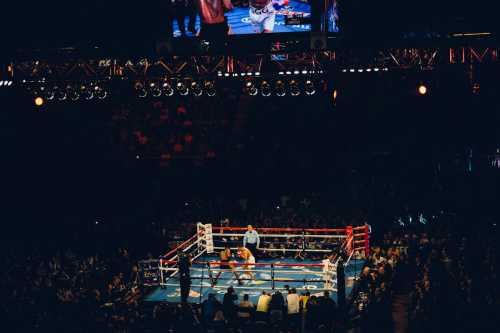
The primer, in plain terms: Fighting used to run like a travelling circus. You set up the tent once a month, charged every town a separate ticket at the gate, and the performers got a slice of whatever that night's gate took. Now a streaming landlord has bought the circus, told the crowd the shows are included with their monthly rent, and started signing the acrobats to annual salaries. Nobody has to pass a hat around anymore — which sounds like progress until you notice the hat was the only place the acrobats ever saw a share of a really big night.
Five Pressure Points, One Balance Sheet
Combat sports is retiring the pay-per-view cash register in favour of a subscription turnstile, and simultaneously attempting to rewrite the statutory architecture that has separated boxing promoters from sanctioning bodies since 2000. Five checkable pressure points define that shift: the UFC's move to Paramount under a rights deal that folds numbered events into a general subscription; TKO Group's launch of Zuffa Boxing as a promoter-operated alternative to boxing's fragmented model; the legislative push to amend the Muhammad Ali Boxing Reform Act; the standing antitrust litigation over UFC fighter compensation; and the sustained redirection of boxing's biggest gates toward Riyadh Season-financed cards carried on general-entertainment streamers.
Read as a portfolio rather than five separate stories, these describe one transaction: the replacement of event-level upside with balance-sheet-level certainty, and the transfer of pricing power from the fighter and the sanctioning body to the rights holder and the platform.
1959 Already Ran This Experiment
The useful precedent is not the 2016 UFC sale or the ESPN era. It is United States v. International Boxing Club, decided by the Supreme Court in 1959, which ordered the dissolution of Jim Norris's IBC after the government established that the organisation controlled the overwhelming majority of championship bouts in the United States. The IBC did not fix every fight or rig every result. It simply owned the venues, the champions' contracts and the broadcast relationships simultaneously — and that vertical control was sufficient to suppress what fighters earned.
The lesson is narrow and transferable: in combat sports, market power is exercised through scheduling and access, not through the scoreboard. A promoter who controls the only calendar worth appearing on does not need to conspire with anyone. The Ali Act of 2000 was drafted precisely to prevent the IBC structure from reassembling, by erecting a firewall between promoter and manager and forcing disclosure of purses and rankings. Any legislative rewrite of that firewall should be read against the 1959 record, not against a press release about fighter welfare.
The Cash Register Was Also the Fighters' Bonus Pool
Data anchor 1. TKO Group and Paramount announced a seven-year US media rights agreement valued at approximately $7.7 billion, roughly $1.1 billion annually, beginning in 2026, under which UFC numbered events are included in a Paramount+ subscription rather than sold as separate pay-per-view buys. Source: TKO Group and Paramount public announcements, August 2025. [VERIFY term, total value and event count.]
The consumer reading is straightforward and correct: the $80 gate is gone and the friction with it. The operator reading is different. Pay-per-view was the last variable-compensation mechanism in the sport — the one line where an over-performing fighter could renegotiate off a number the whole market could see. Convert the revenue to a fixed annual licence fee and the upside is captured upstream, at the rights-holder level, while fighter compensation becomes a negotiated cost line against a known budget. Cost lines get managed. The guarantee de-risks the promotion; it does not automatically enrich the labour.
The case against that reading: guaranteed rights income is precisely what makes a defensible pay floor possible. Pay-per-view was volatile, opaque and routinely disputed at the audit stage; a fighter on a bad card in a bad month earned nothing resembling their market value. A subscription business with predictable revenue can fund baseline purses, medical cover and event bonuses that a gate-dependent promotion never could — and removing the PPV price barrier expands the audience that future contracts are priced against. The honest conclusion is that the shift raises the floor and lowers the ceiling. Whether that is a net gain for fighters depends entirely on whether a collectively bargained floor actually gets written.
The Alphabet Soup Was Never the Good Guys
Data anchor 2. The Ali Act's core provisions — the promoter/manager firewall, mandatory purse disclosure and rankings transparency — are codified at 15 U.S.C. §6301 et seq.; the proposed Muhammad Ali Boxing Revival Act would create an alternative "unified boxing organization" pathway with mandated minimum purses and medical provisions. Source: bill text via Congress.gov. [VERIFY current bill number, status and exact minimum-purse schedule.]
Framing the reform purely as promoter capture understates how badly the incumbent system functions. The sanctioning bodies levy fees calculated against a fighter's purse while accepting no financial risk, mandate eliminators that generate more fees, and multiply titles until "world champion" carries almost no pricing signal. A single promoter-operated league with published pay scales and health cover is, on several measurable axes, an improvement on four organisations selling four belts to the same contender.
The case against that reading: the sanctioning bodies, for all their extraction, are structurally separate from the promoter — and that separation is the entire protective mechanism. Collapse the rankings authority, the promoter and the broadcaster into one corporate entity and you have rebuilt the IBC with better production values. Minimum-purse mandates are only as durable as the statute enforcing them, and the entity lobbying hardest for the rewrite is the entity that would be regulated by it. Both propositions can be true: the incumbent model is extractive, and the proposed replacement concentrates the extraction.
The Antitrust File Nobody Prices In
Data anchor 3. The federal antitrust class action brought by former UFC fighters (Johnson v. Zuffa, D. Nev.) covering the 2010–2017 period was resolved via a settlement in the region of $375 million, with subsequent litigation addressing later periods. Source: court docket, US District Court for the District of Nevada. [VERIFY settlement amount, approval date and status of successor actions.]
Plaintiff filings in that litigation put fighter compensation at a small fraction of promotion revenue — materially below the roughly half-of-revenue splits standard in unionised American team sports. That ratio, not any single purse dispute, is the number that governs the sector's next decade. A rights deal that nearly doubles annual media income while compensation remains a fixed cost line widens the gap that the plaintiffs' bar is already litigating. Expect the ratio itself to become the central public argument, and expect it to be argued in filings before it is argued on podiums.
Before the Next Card: Operator Instructions
Bars, venues and hospitality. Commercial licensing does not follow consumer subscriptions. A Paramount+ household login does not authorise a public showing. Confirm in writing which commercial package covers numbered events under the new rights arrangement before the first 2026 card, and price cover charges against a subscription audience that can watch at home at zero marginal cost. The PPV-era justification for a $20 door charge has evaporated; the margin now has to come from food, beverage and atmosphere.
Gyms, trainers and regional promotions. Do not build a business case on pay-per-view points. Underwrite fighter income from guaranteed purse tiers and sponsorship, and get the split terms in writing before a bout is signed. Regional promotions should assume the streaming platforms will bid for library and live rights, and clean up chain-of-title on fight footage now — undocumented archives are unsellable archives.
Fans and fighters. Read the sanctioning line on any bout announcement. Under a reformed framework, "champion" may denote a promoter's internal title rather than an independently ranked one.
The Six-Month Read (OPINION / FORECAST)
Expect three developments by late May 2027. First, the compensation-ratio argument moves from the antitrust docket into mainstream coverage as the first full subscription-era revenue figures become comparable to disclosed purses. Second, legislative reform stalls or passes with materially heavier disclosure obligations than its sponsors intended, because the 1959 precedent is difficult to argue against once someone enters it into the record. Third, at least one significant boxing gate migrates from a fragmented multi-title build to a single-promoter card on a general-entertainment streamer — proving the model works commercially, which is precisely why the governance question will get harder rather than easier. The turnstile is installed. The argument now is over who holds the key.
Related Articles

The Algorithmic Octagon: A Structural Analysis of Combat Sports' 2026 Commercial and Regulatory Reset
Nov 16, 2026
The Biological Derivatives Market: Sovereign Capital, Algorithmic Enclosure, and the Financialization of Combat Sports
Nov 16, 2026
Comments (0)
No comments yet. Be the first to share your thoughts!
Want to join the discussion?
Please log in to post a comment.
Login NoworCreate an Account