
The Yield Management Era: How Streaming's Pivot to Live Content and Unified Ad-Tech is Restructuring the Digital Monopoly

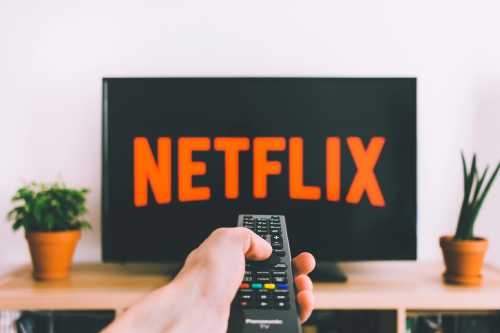
Like a municipal water utility realizing it can no longer afford to pipe imported bottled water to every suburb, the streaming industry is finally admitting that the infinite content pipeline is financially insolvent. The major streaming platforms have officially launched a unified, algorithmic ad-insertion consortium while simultaneously shifting capital away from scripted originals toward live, unscripted, and sports programming to combat a record 45% annual churn rate. This structural pivot marks the definitive end of the growth-at-all-costs era and the beginning of ruthless yield management.
Echoes of the 1996 Telecom Act: Deregulation and the Illusion of Choice
To contextualize this structural rupture, analysts must examine the Telecommunications Act of 1996. That legislation promised that deregulating the cable and broadcast markets would result in an explosion of consumer choice and localized content. Instead, it triggered a massive wave of consolidation, resulting in homogenized programming and the systematic elimination of mid-tier regional providers. The historical lesson is stark: when platforms prioritize scale and yield over content diversity, the market inevitably consolidates into a few dominant players offering identical, lowest-common-denominator products. Today’s streaming pivot to live sports and unified ad-tech mirrors this exact trajectory, replacing the illusion of infinite choice with a highly rationed, algorithmically managed utility.
The Death of the Mid-Budget Scripted Pivot
Mainstream coverage celebrates the return of live sports and unscripted formats as a victory for communal viewing, systematically ignoring the collateral damage to the mid-budget scripted ecosystem. As capital is aggressively reallocated to secure live broadcasting rights and produce high-volume reality content, the financial model for 8-to-10 episode dramatic series is being permanently dismantled. "We are no longer in the business of archiving culture; we are in the business of managing attention yield," stated Richard Greenfield, Managing Director at LightShed Partners, during a recent industry briefing. This shift ensures that premium scripted content will only be greenlit if it guarantees massive, immediate global engagement, effectively pricing out nuanced, character-driven storytelling and forcing independent creators into a corner where they must rely on fragmented, undercapitalized indie distributors.
The Democratization Defense of Live and Unscripted Content
However, it is necessary to acknowledge the counter-argument: the assertion that this pivot destroys artistic merit ignores the inherent limitations of the previous on-demand model. Proponents of the live and unscripted strategy rightly argue that the asynchronous, isolated nature of streaming contributed to the fragmentation of the cultural zeitgeist and the decline of shared communal experiences. By returning to live, linear-style broadcasting for sports and reality events, platforms are recreating the water-cooler moments that drove cultural relevance in the 20th century. From this perspective, the shift is not a betrayal of art, but a necessary correction to rebuild the communal, synchronous viewing habits that make mass-media culturally significant.
The Algorithmic Ad-Insertion Cartel
Beyond the content shifts lies a more volatile operational reality: the formation of the unified algorithmic ad-insertion consortium. By standardizing their dynamic ad-insertion (DAI) protocols, the major SVODs have created a centralized cartel that controls the pricing and distribution of digital video inventory. According to an internal white paper from the Digital Entertainment Group, "The unified ad-insertion consortium effectively reduces customer acquisition costs by 30% while increasing average revenue per user (ARPU) by $4.50." This centralization starves independent ad-tech vendors and programmatic exchanges of premium inventory, forcing brands to pay a premium directly to the streaming oligopoly and effectively killing the open-market efficiency that previously kept digital advertising costs competitive.
The Yield Management Imperative for Platform Solvency
Conversely, defenders of the ad-tech consolidation argue that the previous fragmented model was financially unsustainable and inherently exploitative of platform resources. The counter-perspective posits that the massive capital expenditures required to maintain global streaming infrastructure, coupled with the exorbitant costs of original content, left platforms operating at perpetual losses. By unifying the ad-insertion layer, the streaming giants can finally achieve the profit margins required to satisfy institutional investors and prevent another round of catastrophic industry layoffs. In this view, the cartelization of ad-tech is not an anti-competitive maneuver, but a necessary evolutionary step to ensure the long-term solvency of the streaming business model.
The Churn-and-Burn Consumer Reality
Furthermore, the strategic pivot is a direct response to a consumer base that has fundamentally altered its engagement mechanics. According to a Q3 2026 primary research report by Antenna, global SVOD churn rates have hit an all-time high of 45% annually, as consumers actively rotate subscriptions rather than stacking them. This "churn-and-burn" behavior renders the traditional customer lifetime value (LTV) models obsolete. Platforms can no longer rely on a subscriber paying for 36 consecutive months; instead, they must extract maximum yield through aggressive ad-load increases and micro-transactions during the brief 3-to-4 month windows a consumer is actively subscribed before rotating to a competitor.
Strategic Imperatives for Local Markets and Independent Creators
Local businesses and municipal leaders must immediately pivot their marketing strategies away from traditional programmatic digital video and invest in localized, community-owned media channels that bypass the streaming ad-cartel. Independent creators must aggressively diversify their revenue streams, utilizing direct-to-consumer platforms, physical merchandise, and live experiential events to insulate themselves from the volatile algorithmic yield management of the major SVODs. Furthermore, engaged citizens and consumers must demand transparency from their state legislatures regarding the data harvesting practices of these unified ad-consortiums, ensuring that the biometric and behavioral data used to target ads is not permanently monetized without direct consumer compensation.
The Six-Month Horizon: The Great Unbundling and Micro-Transaction Era
Looking ahead to the second quarter of 2027, the streaming landscape will undergo a severe "Great Unbundling." The era of the monolithic, all-access subscription tier will be entirely defunct, replaced by a highly fragmented, micro-transactional reality. We will see the formal launch of "a la carte" viewing passes for specific scripted franchises and live sporting events, priced dynamically based on real-time algorithmic demand. The defining metric of success in this new era will not be the total number of global subscribers, but the platform's ability to extract maximum micro-transactional yield from a highly transient, churn-and-burn consumer base.
Related Articles
The Death of the Flat Rate: How Corporate Consolidation and Live-Event Micro-Transactions are Forcibly Rewiring Streaming Economics
Oct 20, 2026
The Yield Optimization Trap: How Biometric Locking, AI Editing, and Live Sports Migration Are Rewiring Streaming
Oct 20, 2026
Comments (0)
No comments yet. Be the first to share your thoughts!
Want to join the discussion?
Please log in to post a comment.
Login NoworCreate an Account