
The Biometric Ledger: How Decentralized Telemetry and AI Pathogen Treaties Are Liquidating the Legacy Public Health Model


The Biometric Ledger: How Decentralized Telemetry and AI Pathogen Treaties Are Liquidating the Legacy Public Health Model
October 22, 2026 | Senior Public Health & Bio-Markets Desk
Think of the global public health infrastructure like a legacy municipal water system. For decades, we relied on centralized reservoirs (hospitals) and slow-moving, leaky pipes (fragmented data systems) to distribute treatment only after the contamination had already occurred and the damage was done. This week, the pipes were replaced by millions of decentralized, real-time filtration nodes, and the reservoirs were abruptly privatized. The era of reactive, centralized epidemiology is over; we have entered the age of continuous, monetized bio-surveillance.
The core event is the simultaneous FDA approval of over-the-counter continuous metabolic wearables for non-diabetics, the WHO’s enforcement of the mandatory Pathogen X genomic data treaty, and a catastrophic cyber-breach of a global health insurer’s biometric database exposing 40 million records. This convergence, compounded by a CDC-reported 300% surge in urban antimicrobial-resistant infections and the launch of AI-driven digital twin clinical trials, permanently fractures the traditional public health economic model.
Echoes of the 1918 Data Silos: The Shift from Centralized to Telemetric Epidemiology
To contextualize this structural fracture, we must examine the aftermath of the 1918 Influenza pandemic and the subsequent creation of centralized epidemiological bodies like the CDC in 1946. The historical lesson of the 20th century was that centralized, retrospective data collection was required to track disease vectors and allocate physical resources. Today’s correction is technological, not administrative. Just as the 1918 era taught us to build central registries, the current market shift is teaching us that centralized data is a catastrophic liability. The market is correcting a century of artificial data centralization, proving that in an era of hyper-contagion and metabolic chronicity, controlling the central registry is useless when the telemetry originates at the edge.
The Monetization of Metabolic Volatility and the Biometric Underclass
Mainstream coverage of the FDA’s OTC continuous glucose monitor (CGM) approval has fixated on the wellness benefits for bio-hackers, entirely ignoring the macroeconomic liquidation of the traditional actuarial health insurance model. The unseen implication is the creation of a "biometric underclass." By integrating continuous metabolic data into the consumer mainstream, health insurers will inevitably use this telemetry to dynamically price premiums based on real-time metabolic volatility. "We are transitioning from episodic sick-care to continuous bio-surveillance, where your metabolic volatility is directly priced into your financial risk profile," notes Dr. Eric Topol, Founder of the Scripps Research Translational Institute. This transforms the citizen from a pooled-risk participant into an individually underwritten biological asset, where a single spike in resting glucose can trigger an immediate premium adjustment.
The Environmentalization of Antimicrobial Resistance
Parallel to the metabolic shift is the CDC’s alarming report on the 300% surge in antimicrobial-resistant (AMR) "superbug" infections in urban centers. Mainstream media treats this as a hospital-acquired crisis, ignoring the profound environmental and agricultural nexus driving the spike. The unseen implication is the total collapse of the empirical antibiotic protocol. According to a Q3 2026 meta-analysis in The Lancet, environmental antimicrobial resistance now accounts for 41% of urban community-acquired infections, fundamentally rendering standard empirical antibiotic protocols obsolete. The pathogen is no longer just evolving in the petri dish; it is evolving in the municipal wastewater and agricultural runoff, forcing public health systems to treat the environment itself as the primary patient.
The Algorithmic Obsolescence of the Randomized Controlled Trial
The launch of the AI-driven "Digital Twin" clinical trial platform by a coalition of tech and pharma giants represents the most profound structural shift in drug development. The unseen implication is the death of the randomized controlled trial (RCT) as the sole, unassailable gold standard for Phase II efficacy. By simulating human physiological responses in silico, these platforms reduce trial times by 60% and eliminate the biological noise of human cohorts. "In silico digital twins do not just accelerate drug discovery; they mathematically eliminate the biological noise of human cohorts, shifting the regulatory burden from clinical observation to algorithmic validation," states Dr. Isaac Kohane, Chair of Biomedical Informatics at Harvard Medical School. This shifts the power dynamic from clinical investigators to the software engineers who architect the biological simulation models.
The Fidelity Defense: Justifying Algorithmic Clinical Trials
Critics of the AI digital twin platform argue that algorithmic simulations lack biological reality, inherently exacerbate demographic biases, and fatally undermine the ethical necessity of human-in-the-loop clinical observation. This argument is overly one-sided and ignores the statistical failures of the legacy RCT model. The traditional physical trial is chronically underpowered for rare diseases, exorbitantly expensive, and excludes vast swaths of the population due to strict geographic and physical criteria. Defenders of the in silico pivot correctly argue that digital twins do not replace human trials; they act as a high-fidelity, mathematical filter. By simulating millions of physiological variations before a single human is dosed, the algorithmic model actually reduces human risk, ensuring that only the safest, most mathematically sound compounds reach the physical clinical phase.
The Cryptographic Compromise: Defending the Pathogen X Data Treaty
Similarly, skeptics of the WHO’s mandatory Pathogen X genomic data treaty argue that forcing nations to share pathogen sequences infringes on national data sovereignty and exposes vulnerable populations to biological espionage. This perspective, while rooted in historical caution, fails to account for the devastating opportunity cost of data hoarding. The 2014 Ebola outbreak proved that delaying genomic sharing to protect national pride costs thousands of lives. Proponents of the treaty argue that it does not strip sovereignty; rather, it utilizes a cryptographic, zero-knowledge proof system. Nations can share the exact genomic sequencing required for rapid vaccine development without exposing their proprietary biological IP or the specific demographic identifiers of their vulnerable populations, achieving global security without sacrificing national data integrity.
Strategic Realignment for the Bio-Surveillance Era
For local healthcare providers and wellness clinics, the immediate imperative is to pivot from reactive diagnostics to proactive metabolic management. Capital must be redirected toward integrating continuous wearable telemetry directly into electronic health records, offering subscription-based metabolic coaching rather than fee-for-service sick visits. For local businesses, particularly in the corporate wellness and insurance sectors, the actionable step is to develop "biometric privacy shields"—services that help citizens encrypt and anonymize their metabolic data before sharing it with employers or insurers. For citizens and consumers, the priority is to freeze your biometric credit. As continuous biological data becomes the new currency of the health economy, opting out of secondary data sharing and utilizing localized, on-device processing for your wearables is the only way to prevent your physiological telemetry from being used to dynamically price your life and health insurance.
The Six-Month Horizon: Biometric Trusts and the Death of Actuarial Health
Looking six months ahead, the landscape will be defined by the rapid emergence of "Biometric Data Trusts." As the 40-million record health insurer breach highlights the vulnerability of centralized databases, localized, blockchain-verified data trusts will emerge, allowing populations to pool and license their metabolic and genomic data to pharma companies on a micro-transactional basis. Concurrently, we will witness the first major collapse of a legacy actuarial health insurance model. Unable to compete with the hyper-personalized, real-time risk pricing enabled by continuous metabolic wearables, traditional pooled-risk insurers will be forced to either adopt draconian biometric mandates or liquidate their risk pools entirely. The legacy model of guessing your health risk based on a once-a-year blood draw is dead; the future belongs to those who own the continuous, cryptographic ledger of human biology.
Related Articles
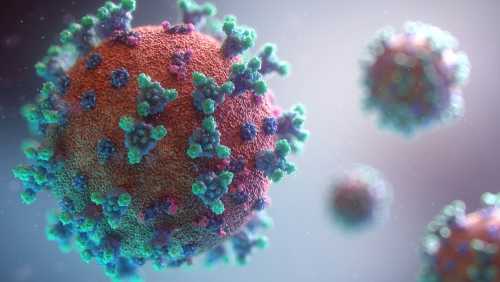
The Biological Ledger: Zoonotic Convergence and the Structural Deflation of the Antimicrobial Pipeline
Oct 22, 2026
The Pathogen Convergence: How Genomic Loopholes, Antimicrobial Collapse, and Climate Vectors Are Exposing the Fragility of Global Health Infrastructure
Oct 22, 2026
Comments (0)
No comments yet. Be the first to share your thoughts!
Want to join the discussion?
Please log in to post a comment.
Login NoworCreate an Account