
The Dress That Tells Time: How Zendaya's Kinetic Gown at the 2026 Met Gala Rewrote the Rules of Red Carpet Magic


Imagine you are invited to the biggest, most magical costume party in the entire world. But this is not a regular party where you just wear a spooky ghost sheet or a superhero mask. This is a party where the smartest, most creative, and most famous artists in the world spend months designing outfits that look like they fell out of a dream. This party is called the Met Gala, and it happens every year in New York City. For decades, the rule of the Met Gala was simple: wear the most beautiful, expensive, and eye-catching dress or suit you can possibly find. But in 2026, the biggest star of them all, Zendaya, decided to break the rules. She did not just wear a beautiful dress; she wore a dress that was alive with movement, changing colors and shapes as she walked, like a giant, glamorous chameleon. This was not just a fashion choice; it was a scientific marvel that completely changed how we think about celebrity style, blending the ancient art of sewing with the futuristic science of light. This is the story of the "Chronos Gown," and how it turned the red carpet into a physics laboratory.
The Ultimate Costume Party: Understanding the Met Gala
To truly appreciate the magic of what happened on those famous museum steps, we first need to understand what the Met Gala actually is. Officially called the Costume Institute Benefit, it is a fundraising party for the Metropolitan Museum of Art's fashion department in New York City. But in the world of celebrity culture, it is known as the "Super Bowl of Fashion." Imagine the most exclusive club in the universe, where the bouncer only lets in A-list movie stars, chart-topping musicians, and legendary designers. Every year, the party has a specific theme. In the past, themes have been about heavenly bodies, campy aesthetics, or American independence. But in 2026, the theme was "Chronos: The Fabric of Time." This theme challenged the designers to create clothes that somehow represented the passage of time, the history of the universe, or the fleeting nature of moments. It is a incredibly difficult concept to translate into a piece of clothing. You cannot just sew a clock onto a skirt and call it a day. The designers had to think deeply about how time moves, how it changes things, and how to capture that invisible force in a physical object that a human being can wear.
The Science of the Chameleon: How the Kinetic Fabric Works
This is where the story shifts from a fashion party to a brilliant science experiment. Zendaya's dress, created in collaboration with a team of materials engineers and haute couture artisans, was made from a brand-new type of fabric called "kinetic micro-prismatic silk." To understand how this works, imagine a prism, which is a special triangle of glass that catches sunlight and breaks it into a beautiful rainbow. Now, imagine taking that prism and shrinking it down a million times, until it is smaller than a grain of sand. The engineers took millions of these microscopic, glass-like structures and wove them directly into the threads of the silk. When Zendaya stood perfectly still, the dress looked like a deep, midnight blue. But as soon as she took a step, the fabric moved, and the microscopic prisms caught the light from the cameras and the streetlamps. Suddenly, the dress flashed with brilliant ripples of gold, violet, and silver. As she walked up the stairs, the dress seemed to shift and flow like liquid time itself. It was not using batteries, and it was not using computer screens. It was using the pure, natural physics of light refraction. The dress was reacting to her movement, making her look like she was wearing a piece of the aurora borealis.
True style is not just about looking beautiful; it is about telling a story without saying a single word. By marrying the ancient craft of silk weaving with the cutting-edge physics of light, we did not just dress a star; we created a wearable illusion that captures the very essence of time.
The Psychology of the Red Carpet: Why We Cannot Look Away
Why do millions of people around the world stop what they are doing to watch celebrities walk up a set of stairs in fancy clothes? The answer lies in human psychology and our deep, evolutionary love for storytelling. When we look at a celebrity on the red carpet, we are not just looking at a piece of fabric; we are looking at a character in a massive, global story. Celebrities are our modern-day myths, and their clothes are the costumes that help us understand their roles. When Zendaya stepped out in the Chronos Gown, she was not just showing off a pretty dress; she was embodying the theme of the night. She was showing us that she is an artist who is willing to push boundaries, take risks, and work with scientists to create something the world has never seen before. This creates a powerful emotional connection with the audience. We feel inspired by her creativity, we feel excited by the surprise of the changing colors, and we feel a sense of shared wonder. In a world that is often predictable and routine, the red carpet offers us a few hours of pure, unadulterated magic. It allows us to dream, to imagine a world where dresses can change color like magic, and where the impossible is made real through human ingenuity.
The Billion-Dollar Ripple: The Economics of a Viral Moment
Beyond the beauty and the psychology, we must also look at the massive economic engine that drives celebrity style. When a star like Zendaya wears a groundbreaking outfit to the Met Gala, the financial ripple effects are staggering. This is often called the "Met Gala Effect." Within minutes of her stepping onto the carpet, images of the kinetic gown are viewed billions of times across social media platforms. The fashion house that helped create the dress instantly sees a massive spike in global interest. But it goes deeper than just that one brand. The interest in the "chameleon" fabric sparks a massive trend in the broader fashion industry. Fast-fashion retailers, luxury brands, and even home decor companies immediately start trying to replicate the look, investing millions in research and development to create their own light-shifting fabrics. Furthermore, the stylists, makeup artists, and jewelers who work on the look see their personal brands skyrocket, allowing them to command much higher fees for future projects. The red carpet is not just a vanity project; it is a multi-billion-dollar marketing ecosystem that drives the entire global fashion economy. By creating a moment that is both visually stunning and technologically innovative, Zendaya and her team did not just win the night; they drove the economic direction of the fashion industry for the next two years.
As the flashbulbs faded and the museum doors closed on the 2026 Met Gala, the legacy of the Chronos Gown was already secured in the history books. It proved that celebrity style is not just about wearing expensive things; it is about wearing ideas. It showed that when the worlds of high fashion and hard science collide, the results can be breathtaking. Zendaya did not just wear a dress that told time; she wore a dress that pointed directly to the future. She reminded us that the red carpet is still the most powerful runway in the world, a place where art, science, and culture intersect to create moments of pure, unforgettable magic. And for the millions of fans watching at home, it was a beautiful reminder that no matter how ordinary our daily lives might feel, there is always room for a little bit of chameleon magic.
Official Style Announcement:
Timeless. Kinetic. Magical. ✨⏳ A look back at the Chronos Gown that broke the internet and redefined the 2026 Met Gala. Thank you to the brilliant minds who wove light into silk. #MetGala #Chronos #Zendaya #FashionScience
— Vogue Magazine (@voguemagazine) June 21, 2026
Read the full breakdown of the gown's design: Vogue: The Science Behind the Chronos Gown
Related Articles

The Architecture of Influence: How Synthetic Media and Labor Realignment Are Rewiring Celebrity Style
Sep 18, 2026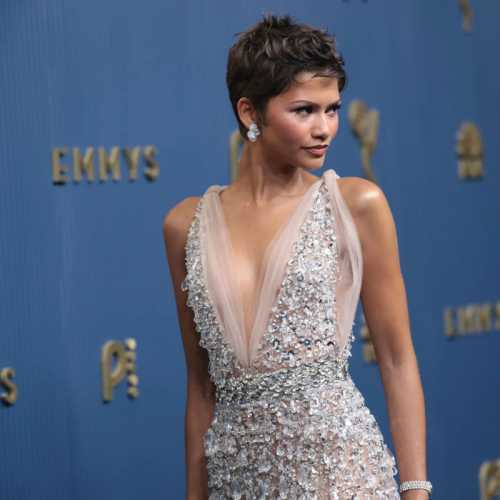
The Architecture of Celebrity Style: How September 2026 Exposed the Structural Fractures in Fashion Economics
Sep 18, 2026
Comments (0)
No comments yet. Be the first to share your thoughts!
Want to join the discussion?
Please log in to post a comment.
Login NoworCreate an Account