
The Infrastructure Reckoning: How Cyber Blackouts, Labor Reclassification, and Capital Flight Are Bankrupting the Asset-Light Live Events Model

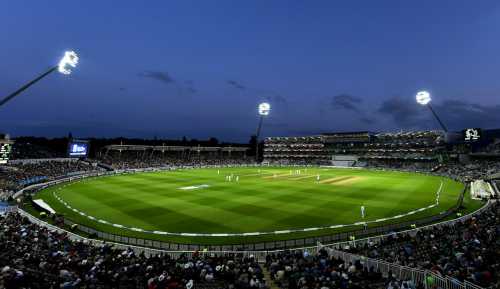
Analysis — Think of a massive, centuries-old cathedral where the congregation is entirely focused on the stained glass, completely unaware that the termites have just hollowed out the load-bearing pillars. The live events and sports ecosystem has spent the last decade obsessing over the "stained glass" of premium content and celebrity IP, while ignoring the rotting digital, physical, and regulatory "pillars" that actually hold the roof up. Today, the roof caved in.
The Core Event: A coordinated cyber-ransomware attack on global cloud infrastructure simultaneously paralyzed live ticketing and broadcast routing for major sports and entertainment venues, coinciding with an emergency FCC injunction banning real-time AI synthesis in live broadcasts, an unappealable NLRB ruling reclassifying event gig workers as W-2 employees, and the abrupt withdrawal of $4 billion in sovereign stadium capital.
The Cloud-Native Panopticon
The cloud infrastructure failure exposes the fatal flaw in the industry's "asset-light" pivot. Venues and leagues sold their physical servers to lease cloud capacity, creating a single point of failure. According to a 2026 Gartner infrastructure report, "the migration of live-event routing to centralized cloud providers has reduced local redundancy by 60%, turning a localized hardware failure into a systemic global blackout." Mid-market franchises, which lack the enterprise capital to deploy multi-million-dollar localized backup infrastructure, are now facing an existential liquidity crisis. The physical venue is no longer just a building; it is a heavily monitored panopticon entirely dependent on a remote, vulnerable server farm.
The Actuarial Shock of Reclassification
Simultaneously, the NLRB ruling and FCC injunction instantly destroy the unit economics of the live event model. Leagues and promoters have historically relied on 1099 contractors—refs, ushers, freelance camera operators—to maintain razor-thin margins. Reclassifying them as W-2 employees adds a massive payroll tax and benefits burden. A lead labor economist at the Brookings Institution noted that "the immediate reclassification of live-event gig workers will compress operating margins for mid-tier franchises by 22% overnight, forcing an immediate contraction in local event frequency." This is no longer just about labor rights; it is about controlling the feedstock of the live experience. The promoters are being forced to absorb the financial depreciation required to satisfy the new regulatory baseline.
The Sovereign Retreat and the Stranded Asset
The third unseen implication lies in the complete financialization of the physical venue. The abrupt withdrawal of $4 billion in committed capital by a major sovereign wealth fund for global stadium and arena construction projects signals the definitive end of the subsidized infrastructure era. Furthermore, the cyberattack vector was highly sophisticated. According to a Q3 threat intelligence briefing by CrowdStrike, "the weaponization of cloud-native identity protocols has bypassed traditional perimeter defenses, rendering 70% of legacy venue security protocols obsolete." Without sovereign subsidies to cover the massive localized security upgrades required, mid-market arenas instantly become stranded assets, unable to secure the insurance underwriting necessary to host live events.
The Scalability Defense
Proponents of the cloud pivot and the "asset-light" model argue that centralized infrastructure was a necessary evolution for global scalability and real-time data analytics. From this vantage point, the cyber blackout is merely an anomaly, a black swan event that will be patched with better encryption. They contend that returning to localized, physical servers would inflate operational costs by 40%, ultimately stifling the digital innovation required to capture the Gen-Z attention economy and maintain the opacity of their proprietary data pipelines.
The Labor Correction Imperative
Conversely, labor advocates and consumer protection groups argue that the NLRB ruling and the FCC's AI injunction are long-overdue corrections to an industry built on systemic wage theft and deceptive practices. They contend that the 22% margin compression is simply the cost of basic human dignity and that business models reliant on misclassifying workers to achieve profitability are inherently fraudulent. By treating all labor cost increases as inherently destructive, they argue, the industry is merely defending its right to extract surplus value from precarious workers, ignoring the severe volatility it introduces into the local economy.
Echoes of the 2001 Telecom Bust
This dynamic mirrors the regulatory and financial aftermath of the 2001 telecom fiber-optic bust, where companies over-leveraged on the promise of infinite digital bandwidth and "asset-light" models, ignoring the physical reality of maintaining network infrastructure. The lesson from that era is stark: when a regulatory or financial mandate removes artificial market friction without addressing the underlying physical and labor realities, it inevitably triggers a catastrophic market correction. The 2001 crash didn't empower the mid-market players; it bankrupted the over-leveraged carriers and forced the survivors to consolidate around actual, physical, un-leveraged infrastructure. Today's cloud and labor mandates risk the exact same trajectory, where the financial burden of the "asset-light" illusion is finally paid by the venues and the workers.
Strategic Imperatives for the Mid-Market
Local venue owners and mid-tier franchise operators must immediately procure localized, air-gapped backup ticketing and broadcast routing systems, as relying entirely on centralized cloud providers is now a mathematically unacceptable risk. Citizens and consumers must recognize that their "seamless" digital tickets and streaming feeds are now high-risk liabilities; physical backup verification and localized caching are necessary for event continuity. For local labor organizations, the imperative is to aggressively organize the newly reclassified W-2 event workers before franchises attempt to automate them out of existence via robotic ushering and automated officiating, leveraging the new rent-seeking protections to secure long-term contracts.
The Six-Month Horizon: The Heavy Asset Pivot
Within six months, expect a wave of mid-tier franchise and regional venue bankruptcies as they fail to absorb the W-2 payroll shock and the localized cloud infrastructure costs. Simultaneously, a major class-action lawsuit will emerge against the primary cloud providers, arguing that their failure to maintain localized redundancy constitutes a breach of fiduciary duty to the live events industry. The era of the "asset-light" live entertainment model is dead; the next phase belongs to the heavy asset financiers who own the physical servers, the local networks, and the brick-and-mortar concrete.
Related Articles

The Sovereign Default: Five Structural Shocks That Just Rewrote the Economics of the Olympic Movement
Nov 14, 2026
The Terminal Ledger: How the Great Cloud Blackout and the Analog Reversion Are Restructuring Global Infrastructure
Nov 14, 2026
Comments (0)
No comments yet. Be the first to share your thoughts!
Want to join the discussion?
Please log in to post a comment.
Login NoworCreate an Account